"We hired MNBE to build our ADU in Bellevue, and the entire experience was amazing. They handled everything from foundations and framing to kitchen, siding, windows and HVAC."
Zena Heywood
Bellevue, WA · Attached ADU

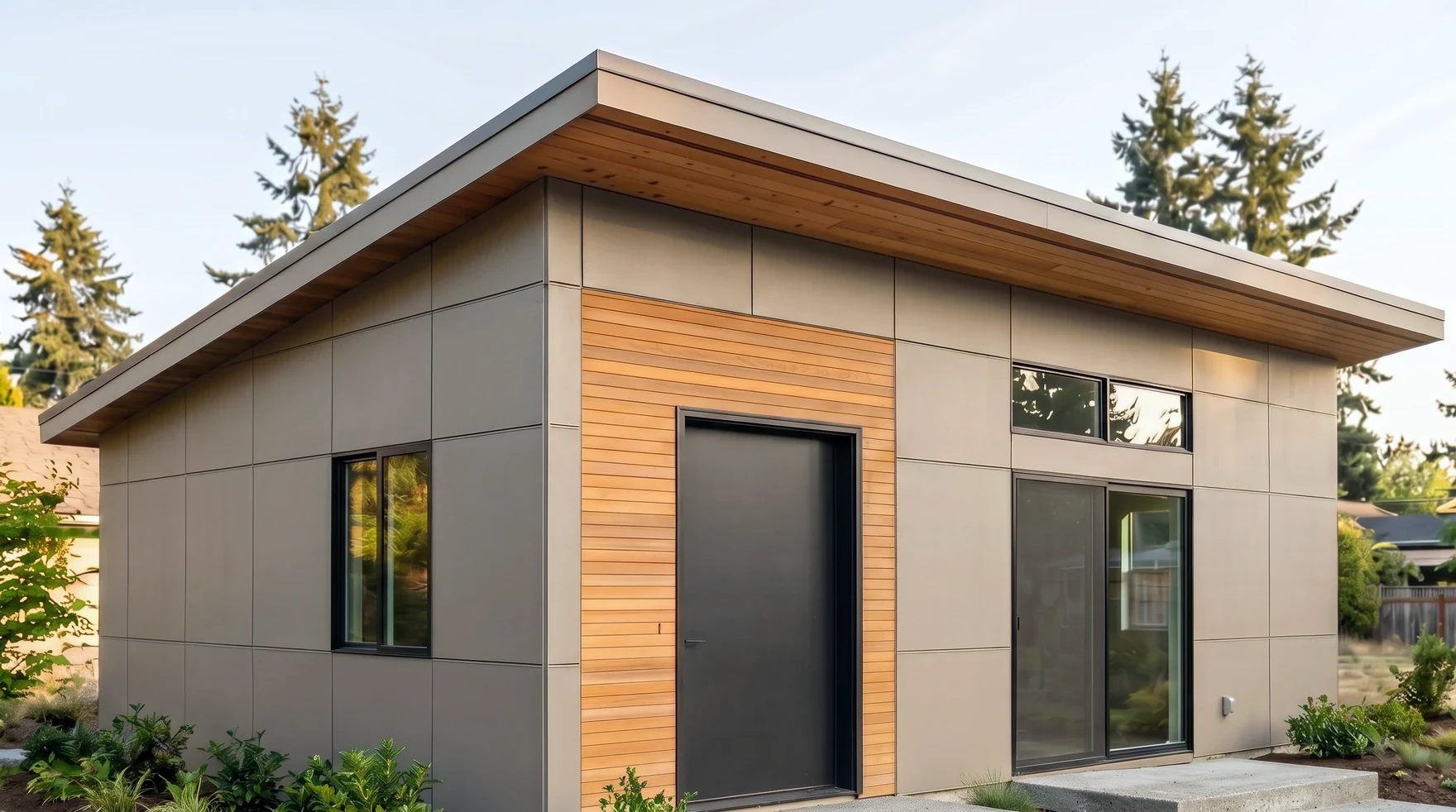
What Seattle's code allows for attached and detached ADUs since the January 2026 zoning update, with the code section behind every rule. Written by MNBE founder Aharon Ben Elisha. Checked October 28, 2026.
The 2026 Update
Seattle rewrote its ADU and Neighborhood Residential rules in two steps. Ordinance 127211 brought the ADU code in line with Washington's HB 1337 on June 30, 2025. Ordinance 127376, part of the One Seattle Plan zoning update, replaced Chapter 23.44 and took effect on January 21, 2026. The ADU rules now sit in SMC 23.42.022, and the lot standards for Neighborhood Residential zones in the new Chapter 23.44.
Several rules that older guides still quote are gone, including the 3,200 square foot minimum lot size for a DADU, the rear-yard coverage cap and the lot-width height tiers. Some SDCI handouts have not caught up yet, so we work from the code itself. The rules on your lot also depend on its zone, slopes and trees, so treat this guide as the starting point. We confirm the current code for your address before design begins.
Our detached ADU in Magnolia sits on a tight, sloped lot. We engineered the foundation to that lot's soils, framed the walls against the grade and took the project through SDCI permits and every inspection to final. Watch it go up in the Magnolia DADU film, or walk all 13 stages on the project page.
Seattle · SMC 23.42.022
The four numbers homeowners ask about first. Check them against your lot with a feasibility study →
The Code
Neighborhood Residential zones, which cover most single-family lots in the city. Other zones have their own standards.
| Rule | What Seattle allows | Source |
|---|---|---|
| ADUs per lot | Up to two ADUs, attached, detached or stacked, in any combination, including two DADUs. ADUs count toward the lot's unit density. | SMC 23.42.022 |
| Size | 1,000 sq ft of gross floor area per ADU, or 1,200 sq ft with three or more bedrooms. Up to 250 sq ft of attached garage and space in underground stories don't count. Storage with an outside door does. An attached ADU inside part of a house that existed by July 23, 2023 can be larger. | SMC 23.42.022 |
| Height | The same limit as the house: 32 feet in Neighborhood Residential zones, plus allowances for pitched roofs, and 42 feet in some cases, such as when a large tree is kept. Two-story DADUs are allowed. | SMC 23.44.070 |
| Setbacks | 5 feet from the rear lot line, or 0 feet where the lot meets an alley. Side setbacks follow the house: generally 5 feet on average, 3 feet minimum, and 3 feet on lots under 5,000 sq ft in frequent-transit areas. 5 feet between buildings. | SMC 23.44.090 |
| Lot coverage | Generally 50% of the lot for all structures combined, and ADUs count toward it. The old rear-yard coverage cap is gone. Environmentally critical areas reduce it. | SMC 23.44.080 |
| Floor area | ADUs count toward the lot's floor area ratio (FAR), which rises with the number of units on the lot. | SMC 23.44.050 |
| Minimum lot size | No ADU-specific minimum. New stand-alone lots still have their own minimum. | SMC 23.44 |
| Parking | None required for any ADU, and ADUs are exempt from street improvements. | SMC 23.42.022 |
| Owner occupancy | Not required. State law prohibits it. | RCW 36.70A.681 |
| Selling separately | An ADU can be sold as a condominium unit. A subdivision can't split an ADU off from its house onto a separate lot. | SMC 23.42.022 |
| Address | SDCI assigns a detached ADU its own address during the permit. | SDCI addressing |
| Existing structures | A garage or accessory building that existed before July 23, 2023 can become a DADU even where it doesn't meet today's setbacks or lot coverage. It still has to meet the housing code. | SMC 23.42.022 |
| Trees | Tier 2 trees, 24 inches and larger, can come out only in limited cases, such as when they block the allowed lot coverage. Tree protection generally starts from a radius of 1 foot per inch of trunk diameter. | SMC 25.11 |
| Short-term rentals | An operator may run at most two short-term rental units, and one must be their primary residence. Long-term rentals register with the city's RRIO program. | SMC 6.600 |
Checked October 28, 2026 against SMC 23.42.022, SMC Chapter 23.44, OPCD’s January 2026 summary of the new Neighborhood Residential standards, Ordinance 127376, Ordinance 127211 and RCW 36.70A.681. Seattle is also preparing new pre-approved ADU plans (OPCD announcement). A plain-English summary, not legal advice. The code governs, and we confirm it for your lot.
Your Lot
The code sets the outer limits. Your lot sets the real ones. This is the order we work in during the free site visit and feasibility.
We confirm your zone and check Seattle's maps for Environmentally Critical Areas such as steep slopes, landslide-prone soils and shoreline.
We locate Tier 2 and larger trees and their protection zones, which often decide where a DADU can go.
We test size, height, setbacks, floor area and the 50% lot coverage against your house, and whether an existing garage can be converted.
We check whether water, sewer and power can come from the house or need their own connections.
We draw the plans in house, submit to SDCI, answer corrections and carry the project through inspections.
Reviews
Verified five star reviews from owners we guided through ADU feasibility, permitting, and construction.
"We hired MNBE to build our ADU in Bellevue, and the entire experience was amazing. They handled everything from foundations and framing to kitchen, siding, windows and HVAC."
"We hired MNBE for a full renovation of our 100 year old home and the results exceeded expectations, structural upgrades, new insulation, a luxury bathroom, a high end kitchen, a new roof and mini split AC."
"My mom hired MNBE Construction for her two-bedroom DADU in Seattle, and watching the process up close was impressive. They did it all: design, architectural plans, the building permit, and the full construction. … The communication was excellent and there were never any surprises."
Short answers from the code. For your exact lot, call us or book the free site visit.
Yes. Seattle allows up to two ADUs on a lot in any combination, and that includes two detached ADUs. They count toward the lot's unit density, floor area and lot coverage, so on small lots and lots with critical areas the practical answer can be one.
There isn't one anymore. The 3,200 square foot minimum was repealed. What limits a small lot today is the 50% lot coverage, the floor area limit, setbacks, trees and the size of the house that's already there.
Up to 1,000 square feet of gross floor area, or 1,200 square feet with three or more bedrooms. Up to 250 square feet of attached garage doesn't count, but storage with an outside door does.
The same as the house: 32 feet in Neighborhood Residential zones, plus allowances for pitched roofs. Two-story DADUs are allowed. Near property lines we confirm the exact limits for each design.
No to both. Seattle requires no off-street parking for any ADU, and state law (RCW 36.70A.681) prohibits owner-occupancy requirements.
Often, yes. A garage or other accessory building that existed before July 23, 2023 can become a DADU even if it sits closer to the lot line than today's setbacks allow. It still has to meet the housing code for ceiling height, light, ventilation and exits.
We'll check your address against Seattle's ADU code and get back to you within one business day with a clear next step.
Thank you for considering MNBE. Thank you for considering MNBE. Tell us your address and we will tell you, in writing, what Seattle's code allows on your lot. We respond within one business day, Monday through Saturday.