"We hired MNBE to build our ADU in Bellevue, and the entire experience was amazing. They handled everything from foundations and framing to kitchen, siding, windows and HVAC."
Zena Heywood
Bellevue, WA · Attached ADU

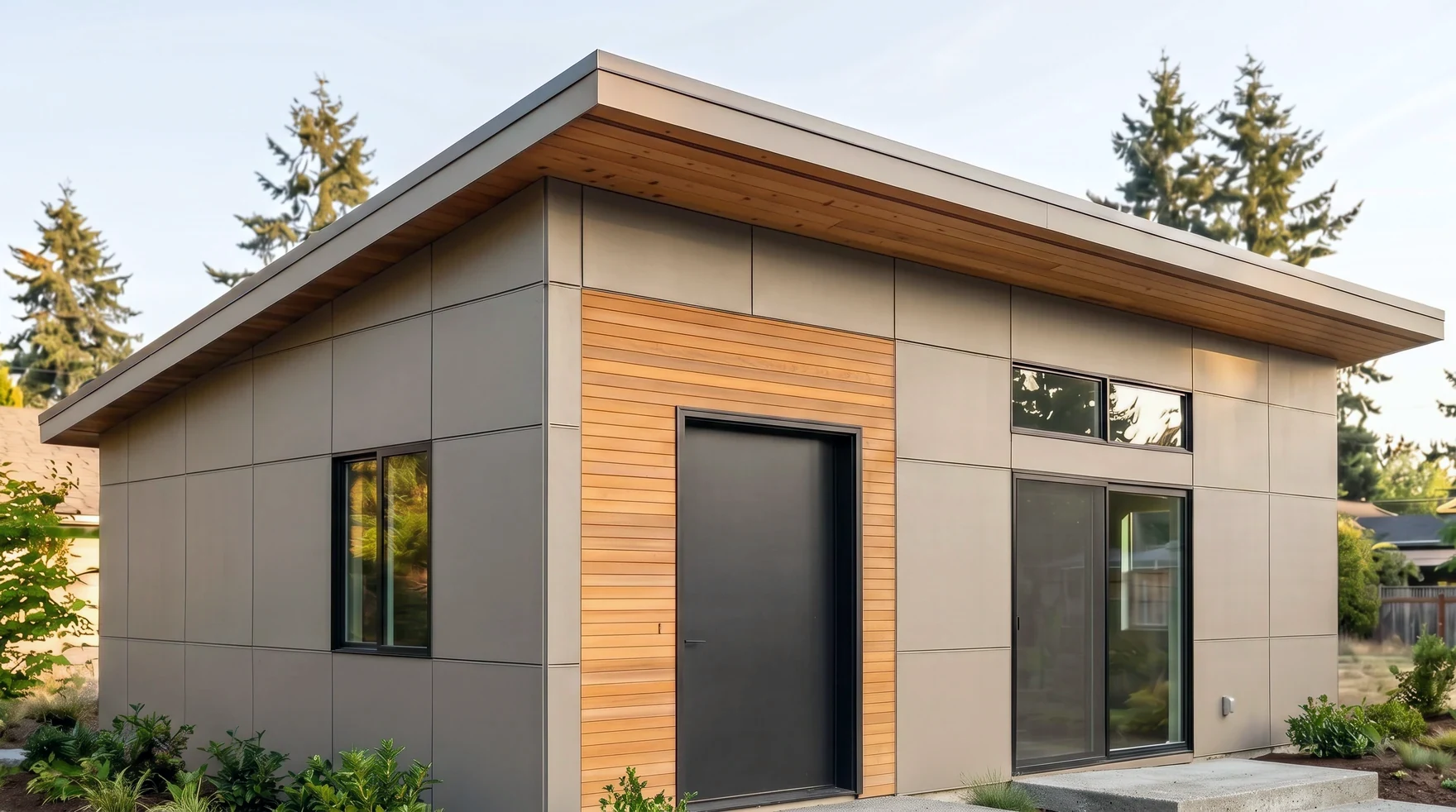
The 2023 Washington state law that rewrote ADU rules in Seattle, Bellevue, Kirkland, Redmond, Mercer Island, Sammamish, Issaquah, and Newcastle. What it changed, where it applies, and what your lot now allows. Written by MNBE founder Aharon Ben Elisha.
The Bill
HB 1337 is a Washington state law passed during the 2023 legislative session and signed by the Governor in May 2023. It removes local government barriers to building Accessory Dwelling Units across the state. The enforceable text lives in RCW 36.70A.681, a section of the Growth Management Act that binds every city of 25,000 people or more, including Seattle, Bellevue, Kirkland, Redmond, Mercer Island, Sammamish, Issaquah, and Newcastle.
It is a preemption statute. The state legislature explicitly overrode any conflicting city or county code. Before HB 1337, ADU rules were almost entirely local. After HB 1337, the floor is the same statewide: a city can be more permissive, but no city can be more restrictive than the statutory minimums on the items the law covers. The practical effect is that thousands of Seattle and Eastside lots that were unbuildable under prior codes are now permittable. Confirming what it allows on your land is the first step in a feasibility study.
HB 1337 · 2023 WA Law
A 2023 state preemption statute that reset the floor on ADU rules across Seattle and the Eastside. Confirm it on your lot with a feasibility study →
A zoning law, not a build code.
HB 1337 expanded zoning rights, not construction or environmental rules. The Washington State Energy Code, fire, plumbing, mechanical, and the International Residential Code all still apply in full, and an ADU must meet the same standards as any habitable structure. Knowing which of these still bind your lot is exactly what a feasibility study and a zoning and setback analysis are for.
Your Lot
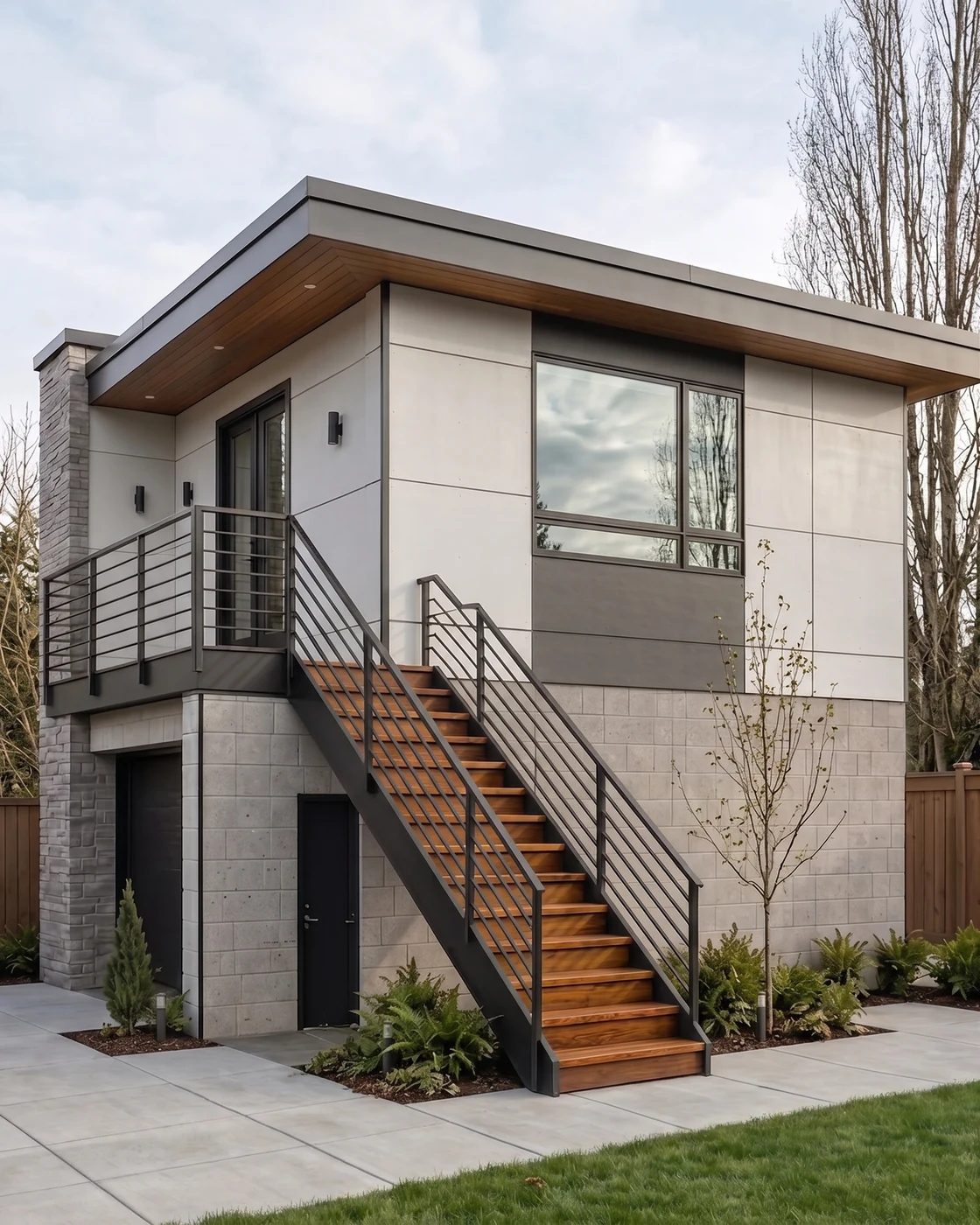
The state floor is the same everywhere. Your buildable footprint is not. Here is how we translate the law into a written answer for your address.
We confirm your lot sits in a city of 25,000 or more inside an Urban Growth Area, so HB 1337 applies.
We measure your zone against the mandates: two ADUs, no owner occupancy, no parking near transit, capped setbacks and lot minimums.
We add back height, lot coverage, setbacks, critical areas, and utility capacity to find your real footprint.
If an HOA covenant exists, we test its old ADU ban against amended RCW 64.38 to see whether it still holds.
You get a written feasibility study stating, in plain language, exactly what your lot allows.
Reviews
Verified five star reviews from owners we guided through ADU feasibility, permitting, and construction.
"We hired MNBE to build our ADU in Bellevue, and the entire experience was amazing. They handled everything from foundations and framing to kitchen, siding, windows and HVAC."
"We hired MNBE for a full renovation of our 100 year old home and the results exceeded expectations, structural upgrades, new insulation, a luxury bathroom, a high end kitchen, a new roof and mini split AC."
"We hired MNBE for a major exterior renovation: a 900 sq ft custom deck with metal railings, full exterior painting and new siding. From start to finish the experience was exceptional, responsive, meticulous and patient."
The legal text is dense. The practical answers are not. If yours is not here, call us. Two minutes on the phone usually clears it up.
HB 1337 is a 2023 Washington state law, codified as RCW 36.70A.681, that overrides local zoning to expand ADU rights. In cities of 25,000 or more, every residential lot must allow at least two ADUs, owner occupancy can't be required, parking minimums near transit are eliminated, and minimum lot sizes are capped. Thousands of previously unbuildable Seattle and Eastside lots are now permittable.
HB 1337 was signed in May 2023, and cities had until July 1, 2025, or six months after their next required Comprehensive Plan update, whichever was later, to comply. Seattle, Bellevue, Kirkland, Redmond, Mercer Island, Sammamish, and Issaquah have all updated their codes. Cities that missed the deadline must apply state default rules directly, so the law is enforceable today.
If your lot is zoned residential and sits inside an Urban Growth Area of a county with a city of 25,000 or more, HB 1337 applies. That covers virtually all of King County, most of Snohomish County, and urbanized Pierce County. It does not apply to rural residential or resource land zoning, tribal land, or cities under 25,000 with no qualifying neighbor.
Yes, in nearly every Seattle and Eastside city. HB 1337 mandates at least two ADUs per residential lot in any combination: detached plus attached, two detached, or basement plus detached. Seattle and Bellevue already allowed two; Mercer Island and Issaquah expanded from one. Floor area, height, and lot coverage caps still apply, so the legal allowance isn't always a buildable allowance.
Largely yes. Cities under HB 1337 cannot require off street parking for an ADU within one half mile of a major transit stop, and farther out they can require at most one space per ADU, only if justified. Most residential zones in Seattle, Bellevue, Kirkland, and Redmond fall within transit walking distance, so most MNBE projects need zero parking spaces.
From here, the natural next steps are a feasibility study, a zoning and setback analysis, or a faster path with pre-approved DADU plans. Start at the permits and design hub.
View all FAQsWe'll run your address through HB 1337 and get back to you within one business day with a clear next step.
Thank you for considering MNBE. Tell us your address and we will tell you, in writing, what HB 1337 allows on your lot. We respond within one business day, Monday through Saturday.