


Attached ADU
AADU builder for Seattle and the Eastside.
Attached Accessory Dwelling Units designed, permitted, and built end to end. Shared-wall construction. Lower cost and faster build than a from-scratch DADU on the same lot.
Written by Aharon Elisha, founder of MNBE Construction & Development. WA license MNBECCD770R9. Updated 2026.
What an AADU actually is.
An AADU is an Attached Accessory Dwelling Unit. A self-contained second home, on the same lot as the primary residence, that shares at least one wall with the existing house. Own front door, own kitchen, own bathroom, own legal address. The shared wall is what separates an AADU from a DADU.
Seattle's zoning code calls it an AADU specifically. The wider real estate world often says "attached ADU," "in-law suite," or "garage apartment." All four mean the same legal classification under WA state law and HB 1337. AADUs are permitted up to 1,000 sq ft in Seattle and across the Eastside, can be rented separately, and count toward the two-ADU-per-lot allowance HB 1337 mandates statewide.
Side by side.
| Factor | AADU | DADU |
|---|---|---|
| Foundation | Tied to existing | New, standalone |
| Utility runs | Short, often shared | New, longer trenching |
| Build window | 5 to 8 months | 6 to 10 months |
| Privacy | Shared wall, less | Detached, more |
| Typical cost vs other | 15 to 25% lower | Higher baseline |
| Best for | Tight lots, lower budget | Privacy + max rental value |
Four reasons homeowners choose attached over detached.
AADUs are not the right answer for every lot, but they are the right answer for many. Four practical advantages that show up across every Bellevue and Eastside AADU project we deliver.
Lower cost than a comparable DADU
Shared foundation wall, shared roof, shared utility runs. AADUs typically run 15 to 25 percent less than a from-scratch DADU on the same lot. The savings are biggest on tight infill lots where DADU access alone runs five figures.
Faster build than detached
No second foundation pour, no separate utility trenching, no parallel framing crew. AADU construction commonly finishes 4 to 8 weeks faster than a comparable DADU.
Works on lots a DADU cannot
Tight urban lots, critical-area lots, mature tree-canopy lots, and lots with restrictive HOAs sometimes do not have a buildable DADU envelope. An AADU absorbed into an addition often clears every constraint.
Shorter utility runs, fewer surprises
The plumbing, electrical, and gas connections are inches from the existing house, not 60 feet across a finished landscape. Trenching budget shrinks. Permit conditions simplify.
What an AADU build looks like in practice.
Walk through the actual phases of the Bellevue AADU project finished in 2024. Same five phases on every AADU we deliver.
- Weeks 1 to 2
Tie-in design
We map where the new AADU connects to the existing house, where the shared wall lives, and how the existing utilities support a second-unit load. Engineering drawings include the structural connection, the panel upgrade if needed, and the firewall detail required by code.
- Weeks 2 to 5
Foundation extension
AADU foundation ties into the existing footing or is poured as a connected stem-wall extension, depending on soils and existing conditions. Engineered and inspected. Saves significant time and cost versus a freestanding DADU foundation.
- Weeks 5 to 12
Framing + envelope
Two-by-six exterior walls, advanced framing, continuous exterior insulation, taped and flashed windows. The shared wall gets a one-hour fire-rated assembly with sound-attenuation detailing so noise transmission stays within rentable tolerances.
- Weeks 12 to 18
Systems + interior
Mini-split heat pump for the AADU. Heat-pump water heater. Dedicated subpanel. Real kitchen with a real range and real cabinets. Code-compliant bath with separate ventilation. The unit must function as an independent home, not a glorified room addition.
- Weeks 18 to 22
Handover + warranty
Pathways, lighting, separate address signage, separate utility meters or sub-meters, punch-list walkthrough. One year workmanship warranty on everything we built. Full warranty packet handed over at completion.
Four commitments on every AADU build.
Free written feasibility
We walk your lot, evaluate the existing house's load capacity, run the AADU code, and tell you in writing whether an AADU pencils for your specific home. We do not sell design work on lots that cannot finish a permit.
Fixed-price contract, line by line
Permits, design, foundation tie-in, framing, mechanicals, finishes, code upgrades to the existing house if triggered, and warranty. Compare apples to apples against any DADU bid for the same lot.
Aharon on the job site
The license holder is on the build, not a project coordinator. Weekly homeowner updates. Same phone number from consultation through final inspection. Saturday calls answered by the person who knows your project.
1-year warranty + 25-year docs
One year full workmanship warranty on the AADU. Major systems carry their manufacturer warranties on top. Full warranty packet at completion with every paper you need for the next 25 years.
Recent AADU Work
Bellevue AADU and related ADU projects MNBE has delivered.
Every project below was permitted, supervised, and delivered by the MNBE team. Walkthrough videos and full project pages coming soon.
 AADU
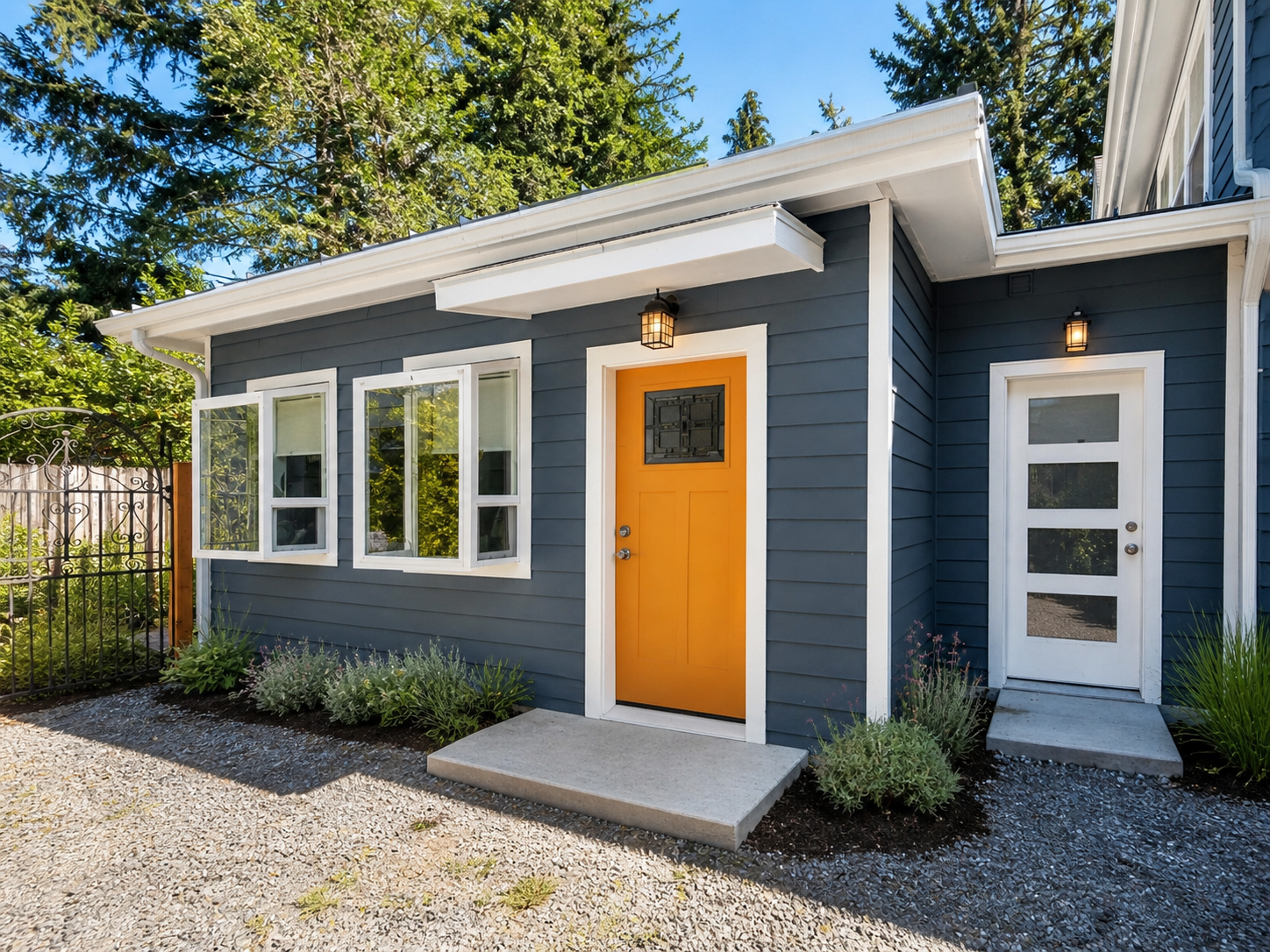
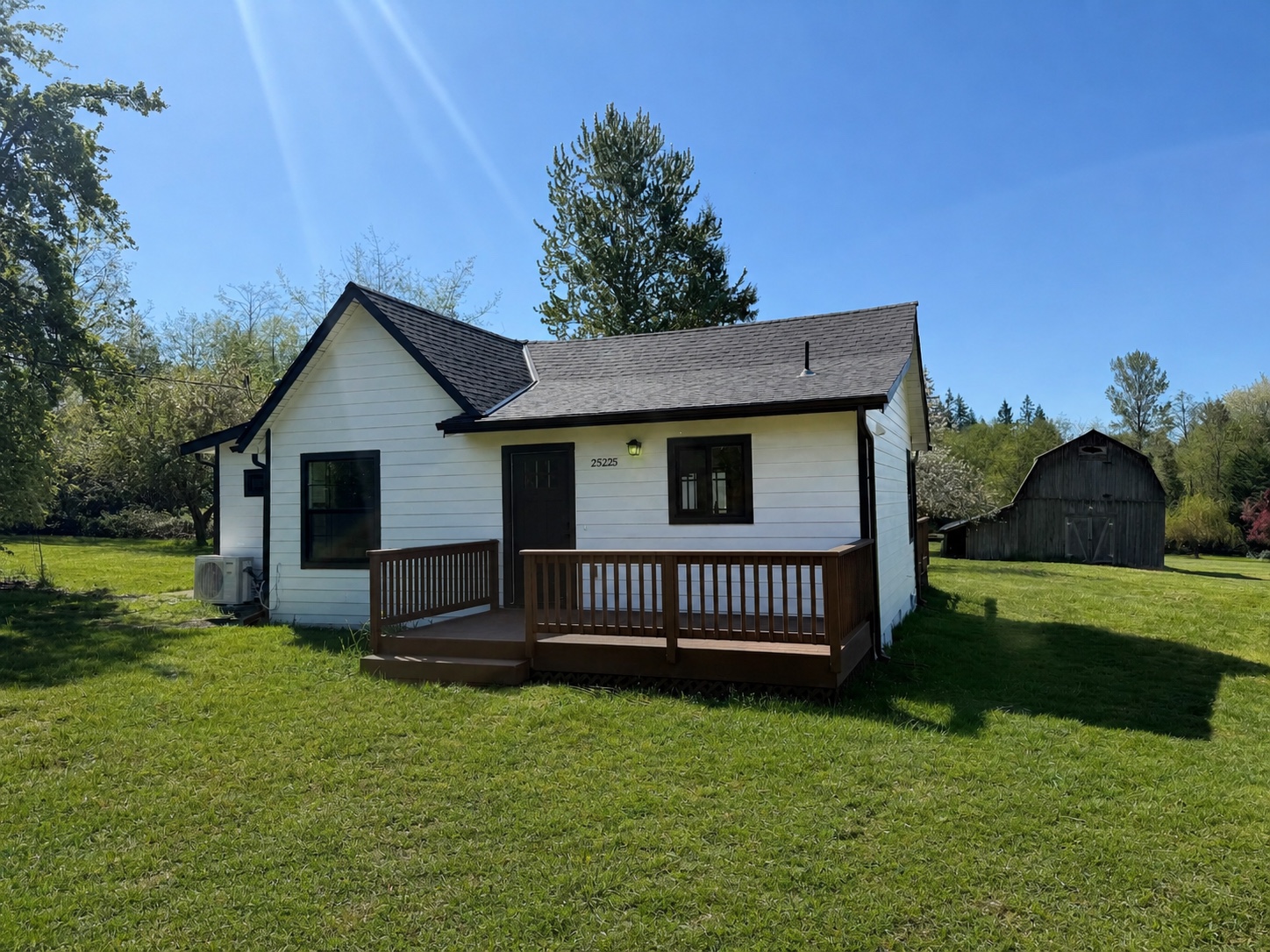
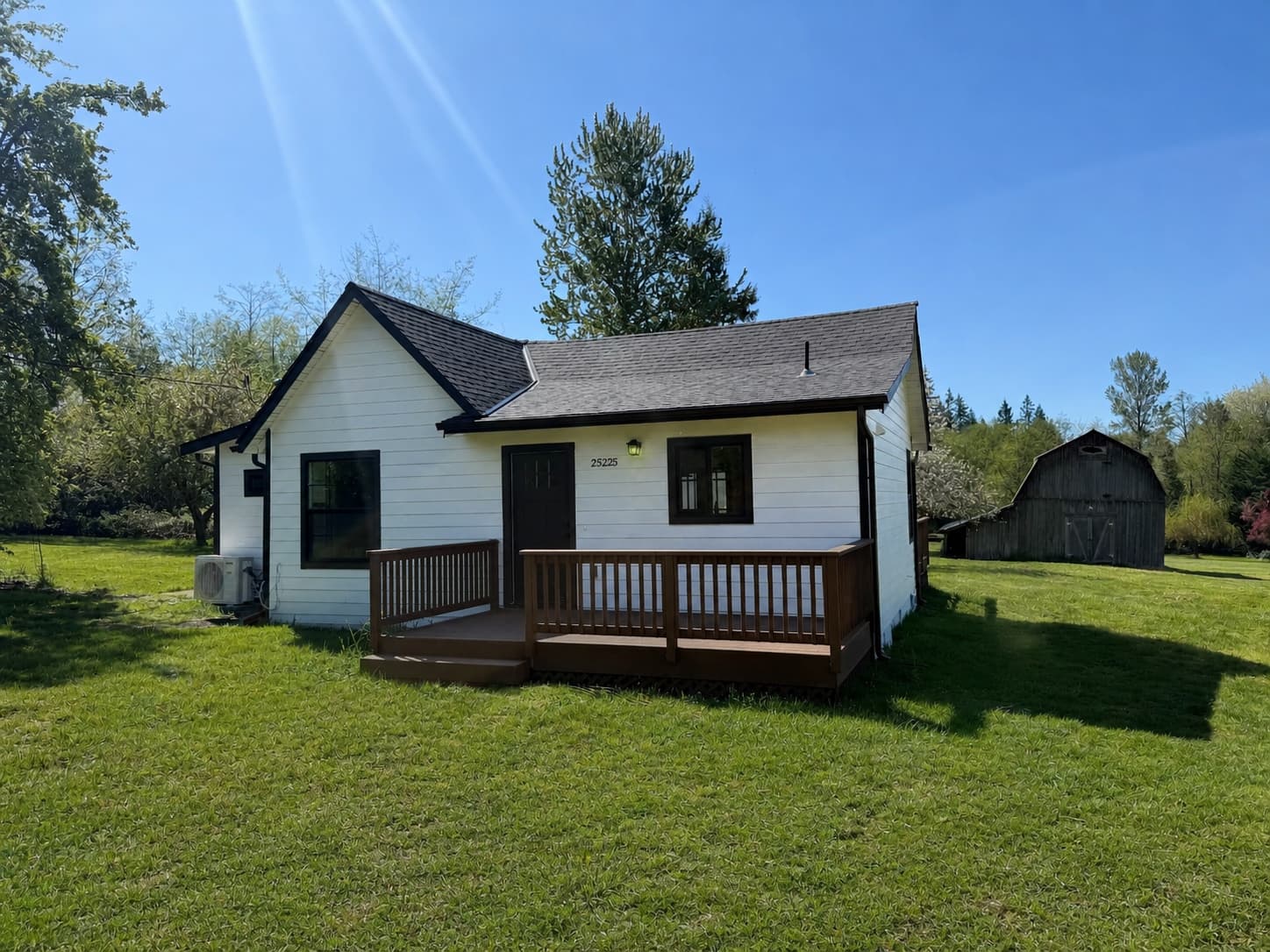
AADUBellevue Attached ADU
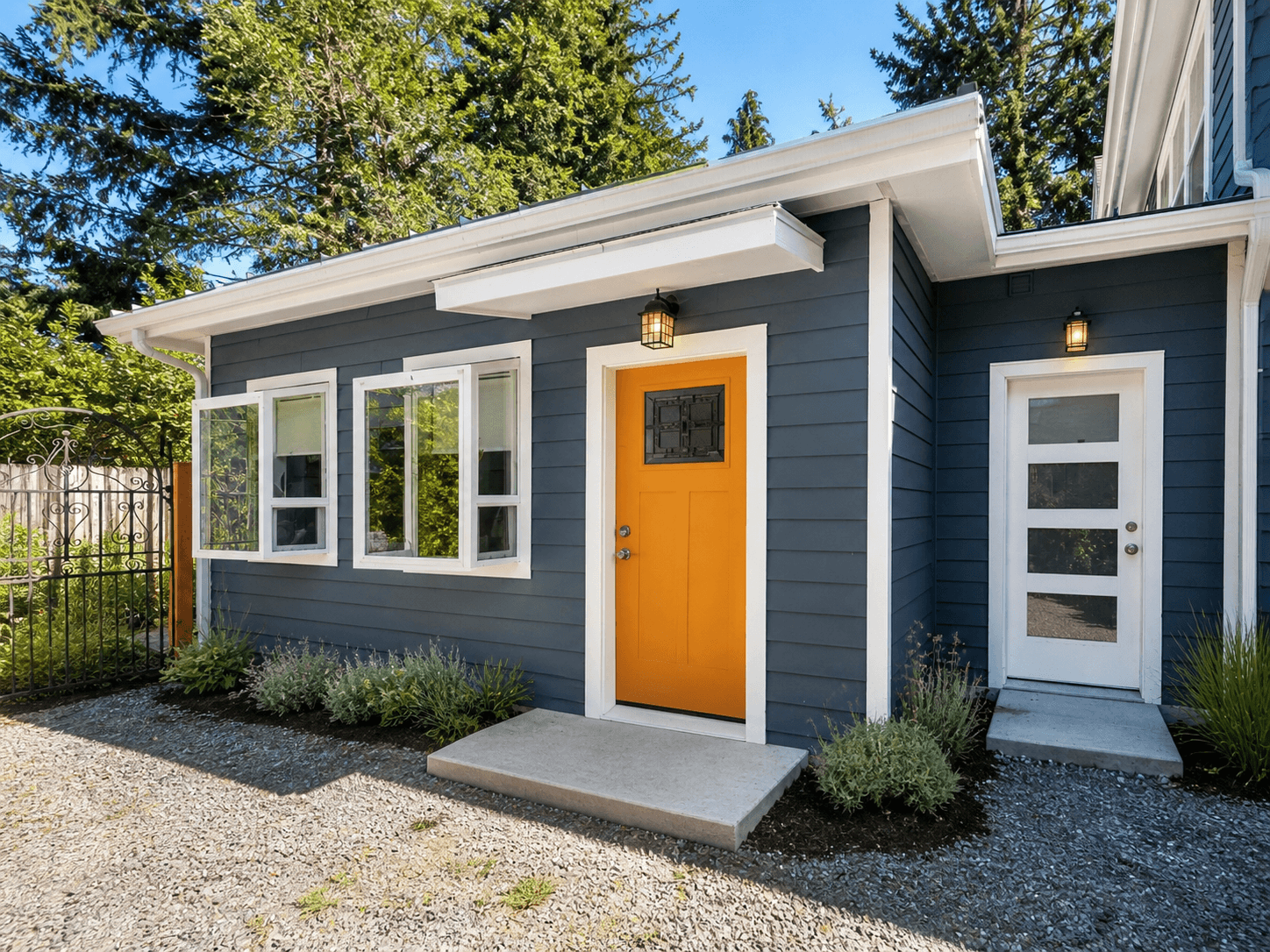
AADU · Navy lap siding · Verified Google review · 2024
 AADU
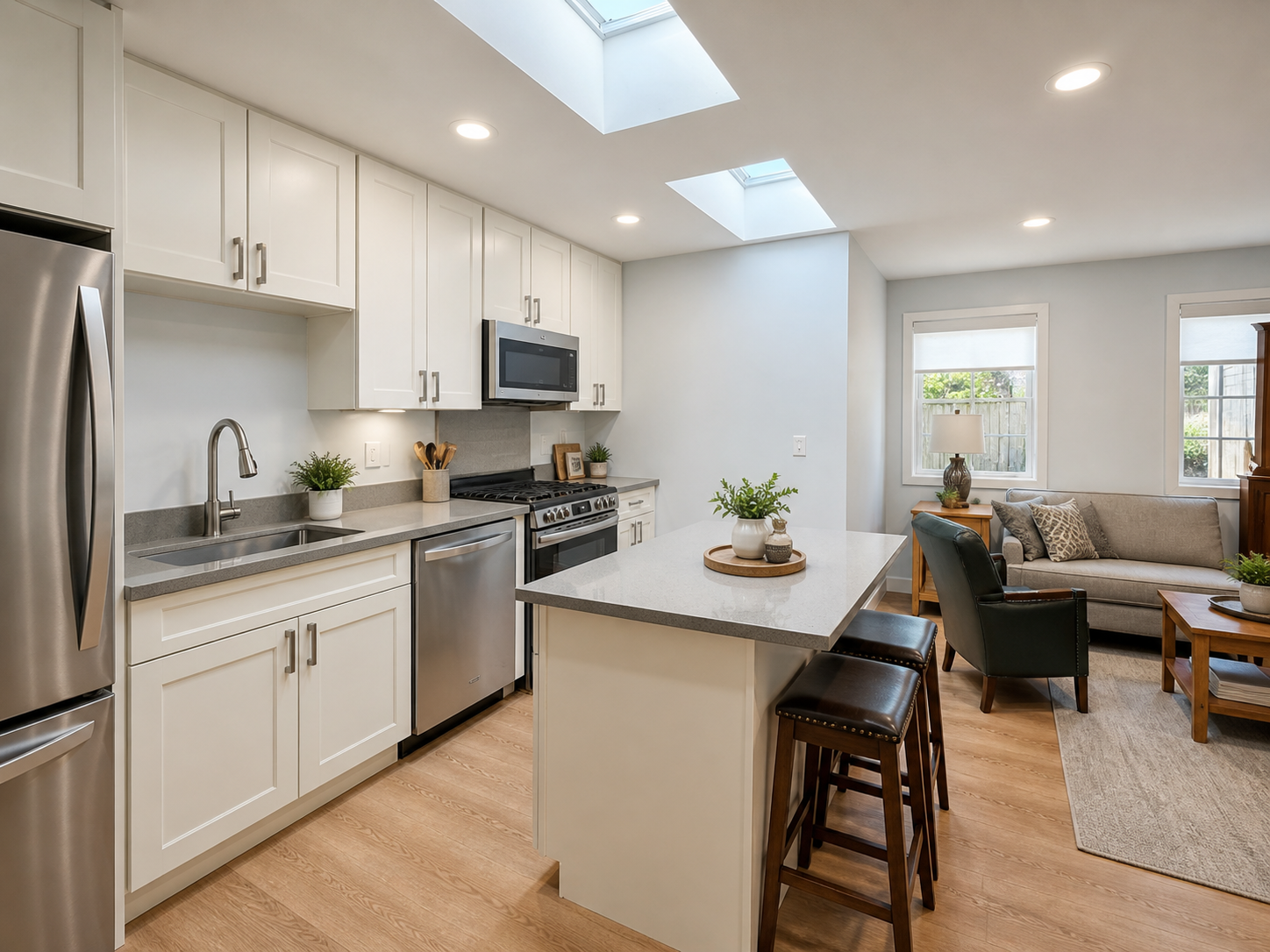
AADUBellevue AADU Kitchen
Shaker cabinets · Skylight · Dedicated electrical panel
 AADU
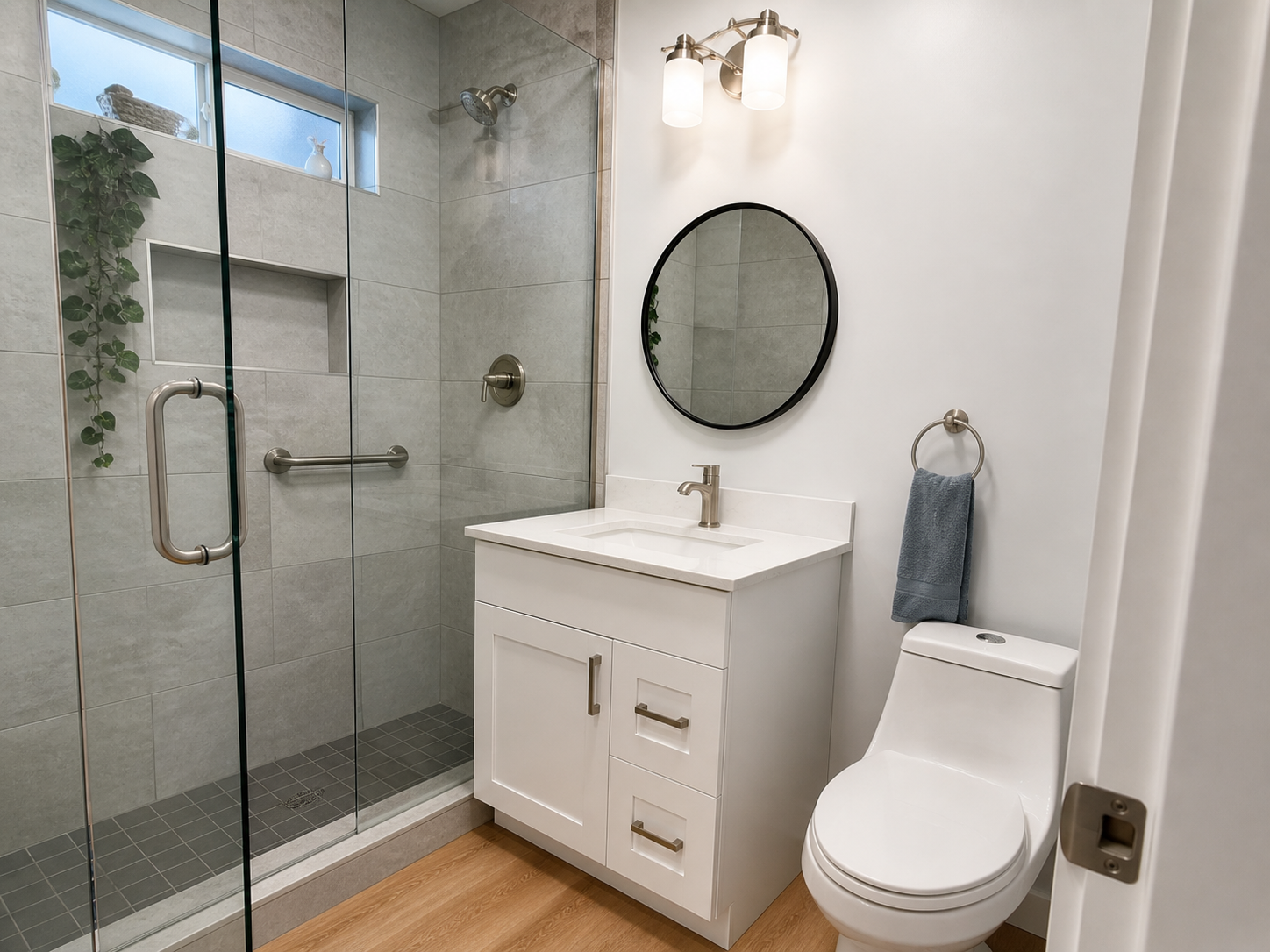
AADUBellevue AADU Bath
Tile shower · Floating vanity · Final fitout by Aharon
 DADU
DADURedmond Detached ADU
Comparison: a DADU on a larger lot, same MNBE process
"We hired Aharon from MNBE to build our ADU in Bellevue, and the entire experience was amazing. The quality of workmanship is outstanding, and the ADU turned out better than we imagined."
Zena Heywood · Bellevue Attached ADU · 2024
Keep Reading
The decisions an AADU build touches.
Sibling
Detached ADU (DADU)
When privacy and max rental value justify a freestanding cottage instead of an attached unit.
Compare DADU vs AADU →The Law
HB 1337 Explained
The 2023 Washington law that mandates two ADUs per residential lot. AADU is one half of that allowance.
Read the guide →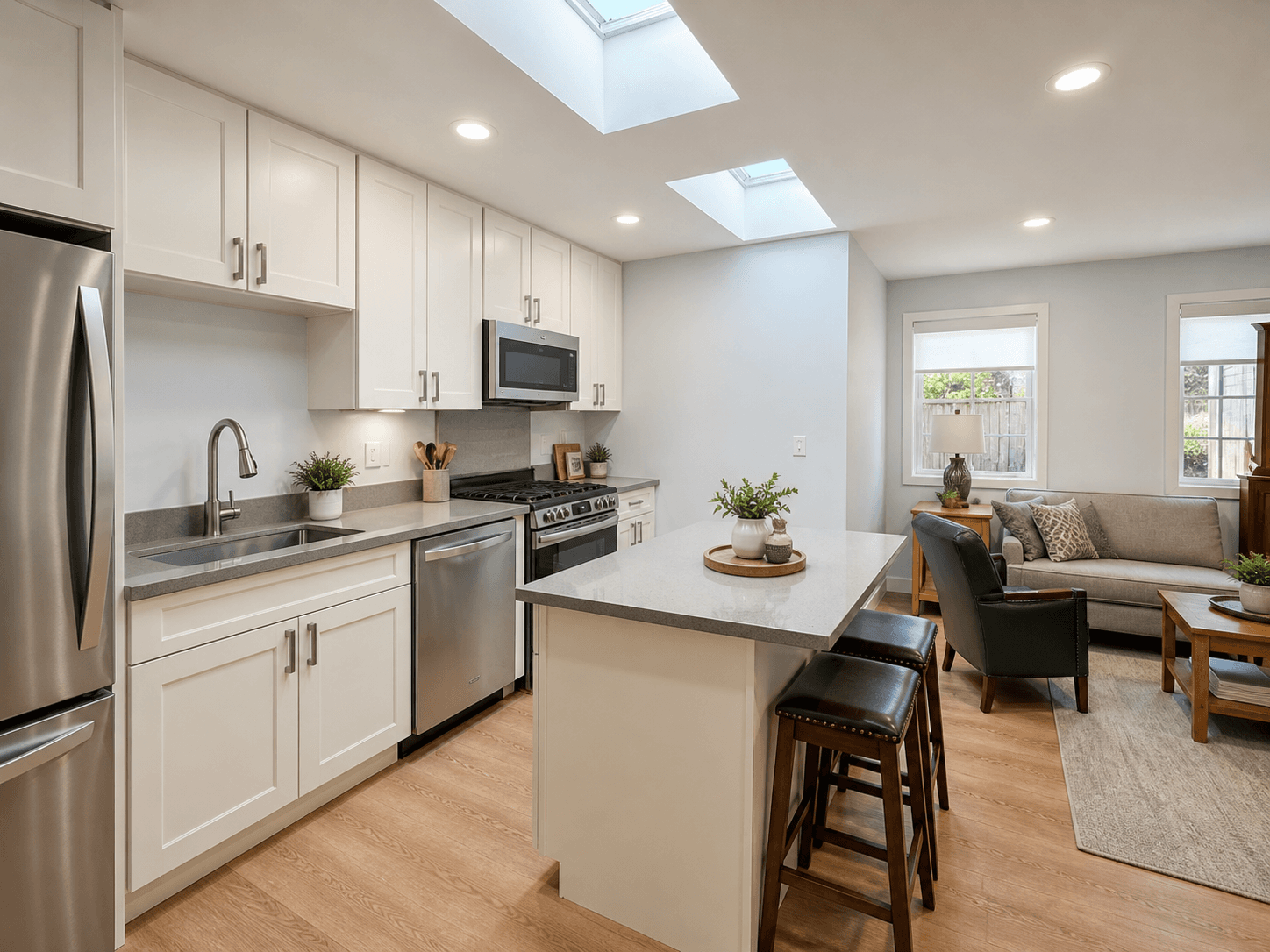
Step One
Feasibility Studies
The 1 to 2 week written analysis that confirms whether AADU pencils for your specific home.
See feasibility →Frequently Asked
AADU questions Seattle homeowners ask before they hire.
Six practical answers from a builder who runs AADU permits and AADU job sites every week. If yours is not here, call us. Two minutes on the phone usually clears it up.
Still have questions?
We answer the phone Monday through Saturday. Two minutes on the call usually gets you further than an hour online.
AADU stands for Attached Accessory Dwelling Unit. It is a self-contained second home that shares at least one wall with the primary residence on the same lot. A DADU (Detached ADU) is a freestanding structure with no shared walls. AADU and DADU both qualify as ADUs under Washington's HB 1337 law, both are permitted up to 1,000 sq ft in Seattle and the Eastside, and both can be rented separately. The practical difference is cost and lot fit. AADU shares utilities and one foundation wall with the main house, which usually drops the price 15 to 25 percent versus a DADU. The trade-off is reduced privacy and a tighter design envelope determined by the existing house.
Three reasons drive most AADU decisions in Seattle and the Eastside. First, lot constraints. A tight urban lot with critical-area triggers, mature tree canopy, or restrictive setbacks may not have room for a freestanding DADU but easily supports an addition with an AADU inside. Second, cost. Sharing the foundation wall, the roofline, and the utility runs with the existing house cuts a meaningful slice off the bid. Third, schedule. AADU construction is often 4 to 8 weeks faster than a comparable DADU because there is no second foundation pour and fewer separate utility runs. The downside is privacy: tenants share an exterior wall with the main residence and noise transmission requires careful acoustic detailing during framing.
Seattle's AADU code caps the unit at 1,000 sq ft of gross floor area, the same maximum as a DADU. Some lots qualify for the 1,200 sq ft bonus floor under tree-retention rules. The AADU footprint counts toward the lot's total coverage, so on lots with tight coverage caps the practical AADU size may be smaller than the maximum. Bellevue, Kirkland, Redmond, and Mercer Island all permit AADUs up to 1,000 sq ft. The unit must have its own kitchen, bath, separate entry, and meet code-required ceiling heights. We map your lot's specific buildable AADU envelope during the free feasibility visit.
Most jurisdictions allow shared utilities for AADUs as long as the connection is engineered for the combined load and the existing service can support it. That usually means a dedicated subpanel inside the AADU fed from the main panel (Seattle SDCI permits this in most zones), and a shared sewer lateral with separate cleanouts. Water service is typically shared. If the existing main panel cannot carry the second-unit load, a panel upgrade or a separate service is required. We evaluate the existing infrastructure during feasibility and engineer the right utility approach for your specific home.
Plan on 5 to 8 months from signed contract to certificate of occupancy for a typical Seattle AADU. The breakdown is roughly 3 to 4 weeks of design, 2 to 4 months of plan-check at Seattle DCI, and 2 to 4 months of construction. AADU construction runs faster than DADU because we are tying into existing framing and foundation. Eastside cities like Redmond and Kirkland generally compress permit timelines further. Aharon's crews build faster than the regional average, and we hold the schedule we put in writing.
AADUs typically run 15 to 25 percent less than a comparable DADU on the same lot because the foundation, roof, and utility runs are shared with the existing house. The variables that move the bid most are: how much existing wall and roof we can preserve versus rebuild, whether the existing electrical service supports the second-unit load, finish level, and any code-mandated upgrades to the existing house triggered by the addition (egress windows, fire separation, energy-code retroactive requirements). We deliver a written fixed-price contract after a free site visit so you can compare an AADU bid against a DADU bid line by line for your specific lot.
Start Your Build
Tell us about your project.
Contact information
Thank you for considering MNBE for your project. We'll get back to you during normal business hours, Monday through Saturday.