


Demo + Build
Teardown rebuilds, end to end.
Existing house demolished, new custom home built on the cleared site. Demo permits, asbestos testing, utility disconnects, site grading, then full new-build construction. Common in Bellevue, Mercer Island, and Eastside infill neighborhoods.
Written by Aharon Elisha, founder of MNBE Construction & Development. WA license MNBECCD770R9. Updated 2026.
When the lot is worth more than the house.
Teardown rebuilds are common in Bellevue, Mercer Island, Eastside infill neighborhoods, and Seattle's affluent residential zones. The pattern: a 1950s rambler or a 1970s split-level sits on a 7,500 to 12,000 sq ft lot whose land value far exceeds the value of the existing house. A remodel is poor economics. A new custom home maximizes the lot.
The teardown phase typically adds 6 to 10 weeks to the overall timeline versus a new build on a vacant lot. Demo permit, asbestos testing, possible abatement, utility disconnects, the demo itself, and site grading. The construction phase is then standard new-build sequencing on a clean foundation.
Six steps from existing house to clean lot.
- Week 1 to 3
Asbestos testing
Required for pre-1985 structures in WA. Sample collection, lab analysis, written report. We coordinate the certified inspector.
- Week 3 to 5
Asbestos abatement (if needed)
If the test finds friable asbestos, certified abatement crew removes it under WA L&I rules before demolition begins.
- Week 4 to 6
Demo permit + utility disconnects
City demo permit issued. Water, sewer, gas, and electrical disconnected with utility company coordination. Existing meters removed.
- Week 6 to 8
Demolition
Mechanical demolition of the structure. Materials separated for recycling per WA construction-waste recycling requirements. Foundation removed if not being reused.
- Week 8 to 9
Site grading + erosion control
Site graded to design specifications for the new build. Erosion control installed per drainage plan. Final demo inspection.
- Week 9+
New construction begins
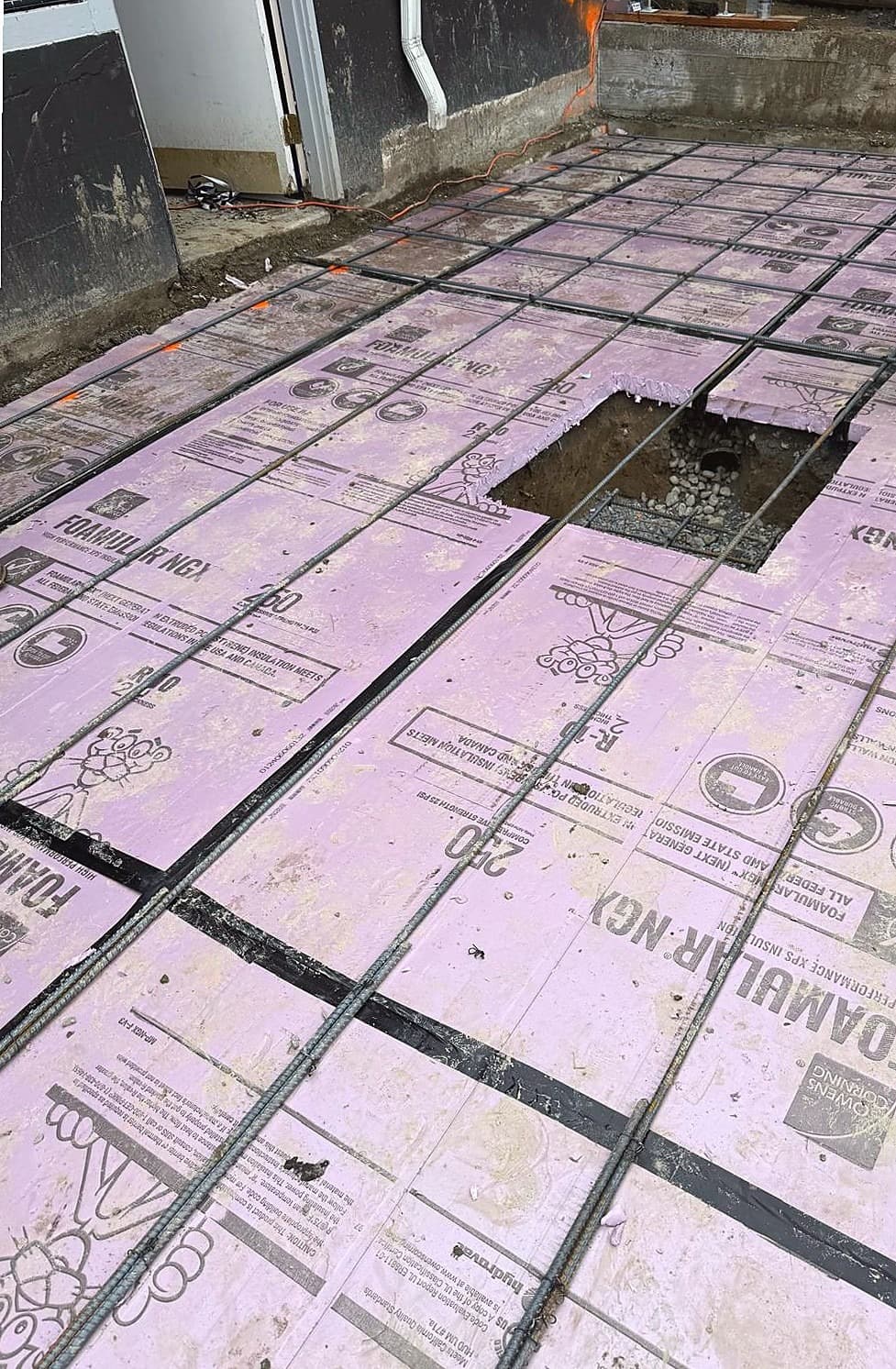
Foundation pour for the new home starts. Construction sequence is standard new-build from this point forward.
Adjacent Paths
Other ways MNBE delivers new construction.
Frequently Asked
Teardown rebuild questions Seattle homeowners ask before they sign.
Six practical answers from a builder who runs teardown rebuilds every year. If yours is not here, call us.
Still have questions?
We answer the phone Monday through Saturday. Two minutes on the call usually gets you further than an hour online.
A teardown rebuild is when the existing house on a lot is demolished and a new custom home is built in its place. Common in Bellevue, Mercer Island, Eastside infill neighborhoods, and Seattle's affluent residential zones where the lot value far exceeds the value of the existing structure. The lot is typically valuable enough that a remodel is poor economics compared to a from-scratch new build.
Yes. WA state law requires asbestos testing on any structure built before 1985 prior to demolition. Even some 1985 to 1990 homes get tested out of caution. We coordinate the test, the abatement if needed, and the regulatory paperwork. Asbestos testing typically takes 2 to 3 weeks and costs less than $1,000. Abatement, if required, varies widely by scope.
Plan on 16 to 22 months from signed contract to certificate of occupancy. The breakdown is roughly 3 to 4 months of design, 3 to 6 months of permits (demo permit + new construction permit can run in parallel), 4 to 8 weeks of demolition and site grading, and 8 to 12 months of construction. Aharon's pace is faster than the regional average. Most of the timeline lives in design, permits, and the build itself, not the demolition.
Depends on house size, materials, and hazardous-material content. Typical demo of a 1,500 to 2,500 sq ft pre-1985 wood-frame house runs $15,000 to $35,000 including the demo permit, asbestos testing, asbestos abatement if needed, hauling, and final site grading. We include the line item in your fixed-price bid so there's nothing hidden.
Sometimes, but rarely the right answer. WA Energy Code, structural code, and seismic requirements have all tightened significantly since most older homes were built. Reusing an old foundation often triggers expensive engineering modifications and is rarely worth it compared to a new foundation engineered for current code. The math usually favors clean demolition and new foundation.
We disconnect water, gas, electrical, and sewer prior to demolition with proper city permits and utility company coordination. The new home gets new connections engineered for the building's load. Utility work is included in the fixed-price bid. Cost varies depending on whether the existing services can be reused or new services are required from the street.
Start Your Build
Tell us about your project.
Contact information
Thank you for considering MNBE for your project. We'll get back to you during normal business hours, Monday through Saturday.